
Lessons from a pulse-monitoring research project
Reflections on building a wrist-pulse monitoring device for Traditional Chinese Medicine — and what BLE data loss taught me about real-time systems.
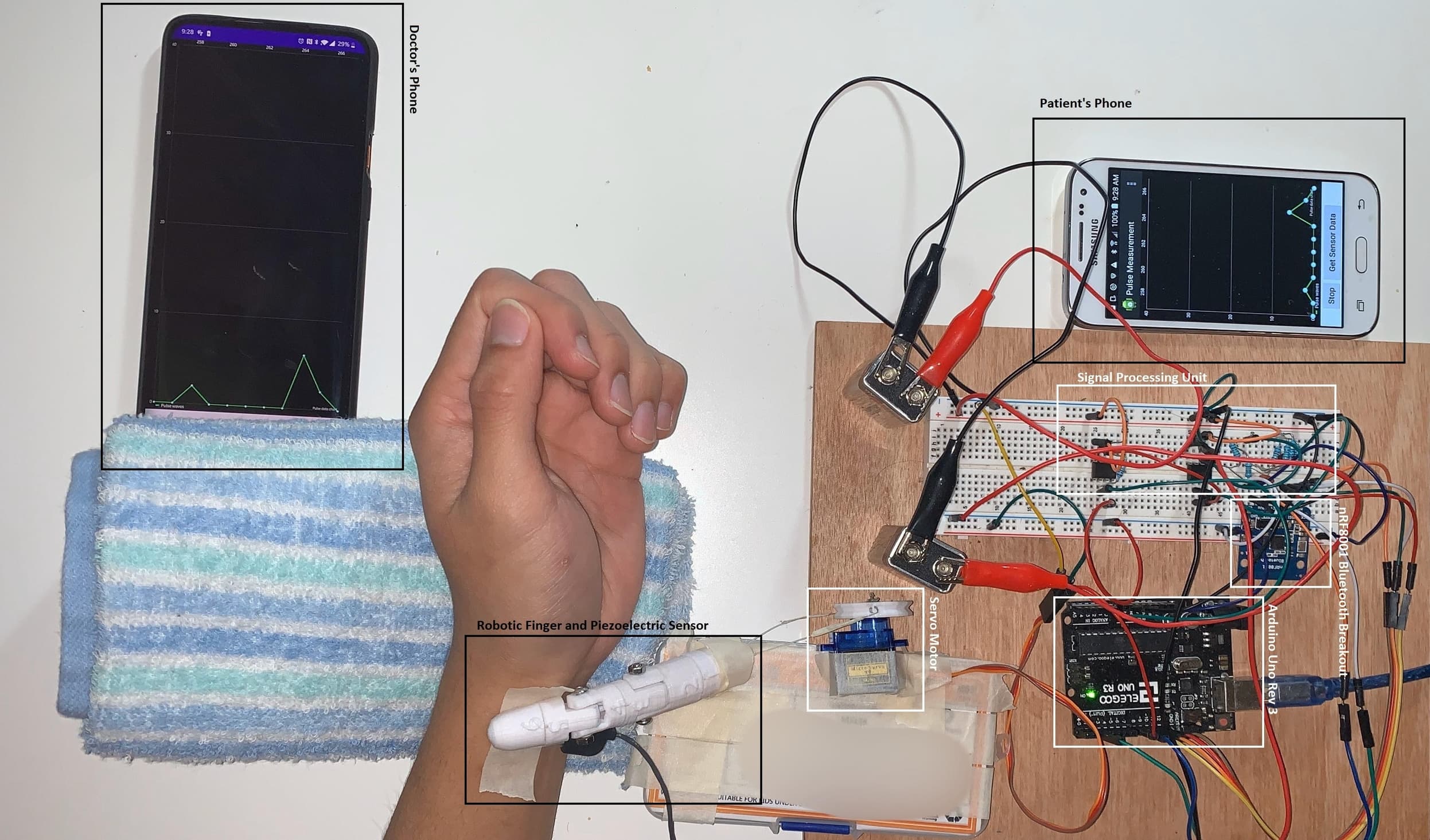
Over two years I worked with Professor Chen-Hsiang Yu on a device to capture and visualize wrist-pulse data for Traditional Chinese Medicine diagnosis. Here are a few things that stuck with me.
Hardware constraints shape software design
Our first version published sensor data over Bluetooth Low Energy. It worked — until we measured the data loss. For a diagnostic tool, dropped samples aren't a cosmetic problem; they change what the doctor sees.
When to change the platform
We eventually replaced the Arduino with a Raspberry Pi and an external ADC. Moving the frontend onto the device itself removed a whole class of transmission problems. The lesson: sometimes the right optimization is to delete the part that's failing, not to tune it.
Research is iteration
Publishing at IEEE MIT URTC across two years taught me that a research project is a sequence of honest measurements. Each part of the project existed because the previous one exposed a real limitation.